


10 Aug What are the Differences Between Mild and Structural Steel?
We see and use steel almost everywhere nowadays, with various types of steel existing in numerous forms all throughout modern society. You may be familiar with the terms structural steel and mild steel, but what exactly separates the two?
What is Structural Steel?
Structural steel refers to a category of various types of steels, all of which can be fabricated into different shapes, dimensions and sizes. There are numerous products that fall within this category, that are classified by their shape and uses. These include the likes of:
- Universal beams (I beams)
- Parallel flange channels (PFC)
- Steel hollow sections (circular, square and rectangular)
- Universal columns (H beams)
- Angle sections (equal and unequal)
Though the list really doesn’t stop there.
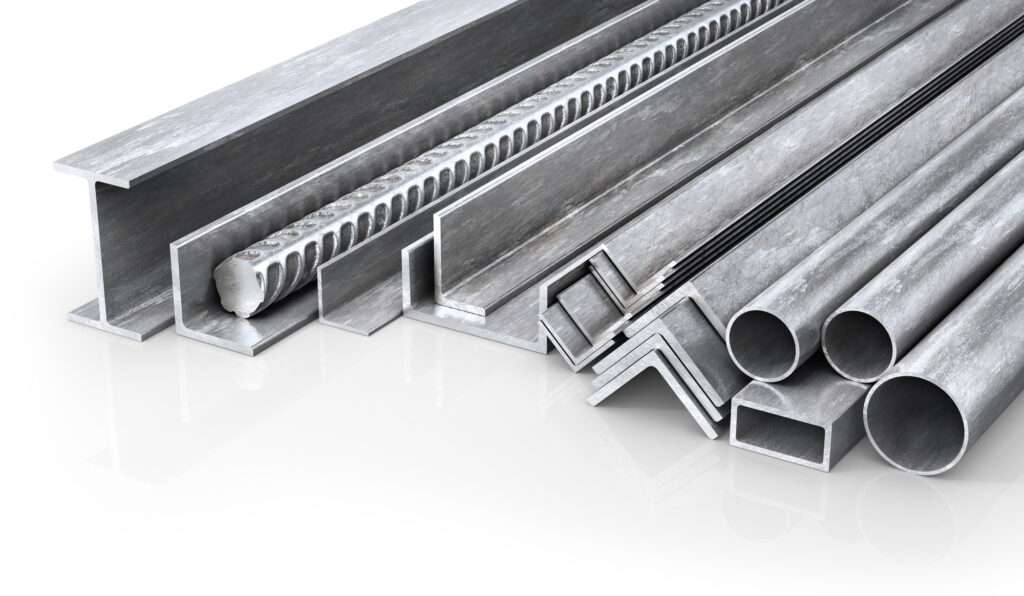
Typically speaking, structural steel beams are incredibly robust and rigid across the board, with many products classified by the shape of their cross-section. This cross-section is also where the products bear the highest amount of pressure, meaning they can support exceptionally heavy loads without bending or cracking. Often, structural steel sections only contain carbon and iron, but occasionally other alloying materials (like aluminium and chromium) can be added to alter the properties.
Structural Steel Grades
There is no universal type of structural steel, but as a construction material, it can be used for a variety of different purposes. The grades of structural steel directly affect the mechanical properties, so different structural grades must be chosen depending on the design requirements outlined in architectural drawings.
EN 10025 compliance
In Europe, these products must adhere to EN 10025, the European Standards for fabrication and supply of structural steel. There are various European grades out there, but three of the most-used grades are below:
- S235
- S275
- S355
The three-digit number refers to the minimum yield strength of the steel at a nominal thickness of 16mm. It’s worth noting that the higher the number, the greater the tensile strength. Please refer to our structural steel page for accurate specifications.
Structural steel is supplied in numerous grades but is typically sold in either of the three aforementioned grades, having been pre-fabricated with a defined cross-sectional shape.
Common Applications of Structural Steel
Hot-rolled structural steel beams aren’t purely restricted to be used in the construction of buildings, although builders are frequent customers for structural steel fabricators like Baker Steel Trading. Structural steel is used to construct residential and commercial buildings, warehouses, industry equipment, storage facilities, vehicles and much more. This type of steel has high levels of strength and elasticity making it suitable for numerous applications. You can read more about common uses here.
What is Mild Steel?
Mild steel is a specific type of steel which is used for a variety of applications. It is a ferrous metal comprising of both iron and carbon, similarly to structural steel. Mild steel is a very cost-effective material, with 90% of steel products in the world using some form of mild steel.
It is often described as low carbon steel, with its carbon content never exceeding 0.29%. Steels with a higher carbon content than this have a lower melting temperature; given that mild steel’s melting point is higher, it’s more ductile when heated, making it very easy to fabricate, forge, weld, cut and drill.
Mild steel products are categorised as anything from the following:
- Steel flat bars
- Steel tubing and pipe
- Steel rods
- Box sections
- Round bars
- T-sections
Mild Steel Grades
There are many grades of mild steel which vary according to manufacturers. Some of the most common ones are:
- EN24T
- EN3B
- GMS (galvanised mild steel)
- EN1A
- Corten Steel
Common Applications of Mild Steel
Mild steel has many applications, depending on its grade. Corten steel, for example, is suitable for use in steel frame buildings and manual or mechanical steel welding. EN24T is typically used for high-strength machine parts or axles.
GMS is extremely corrosion-resistant thanks to its added protective layer of zinc (see steel finishing) so is great for outdoor structures that need to be heavily weatherproof. EN1A is ideal for uses where intricate drilling is required, such as bolts, nuts and studs. EN3B is bright, unalloyed carbon steel which is suited to the manufacture of threaded bars, machine parts or gears.
Hopefully, that clarifies any confusion about the differences between structural and mild steel. They both have different properties, product ranges, grades and applications.
Speak to a Steel Fabrication Company
Baker Steel Trading are experienced steel fabricators, with a wealth of knowledge and experience fabricating almost any steel product to your specifications. If you need further advice, or would like to get a quote, then speak to the team today. Please also be sure to check out our additional services which can help make your project easier, such as steel fabrication drawings, mobile welding and on-site measuring.