


04 May What Types of Welding Joints are Used by Welders
Despite being one of the most frequently used fabrication processes in the UK and beyond, welding is a complex task that requires an eye for detail and a lot of patience. The complexity of this steel fabrication task boils down to techniques and practices that coded welders must be specially trained in to do their job correctly. They must also have expert knowledge of the welding joint types that are commonly used.
What is a Welding Joint?
If you’re unsure what a welding joint is, don’t worry, you’re not alone.
Whilst the general metal welding process is familiar to many, the specific tasks involved are less known. This steel fabrication task involves heating two or more pieces of metal or plastic to join them together. The specific welding joint is the point or edge where this occurs.
Depending on the welding machinery used and the purpose of the end product, one of five common joints can be used.
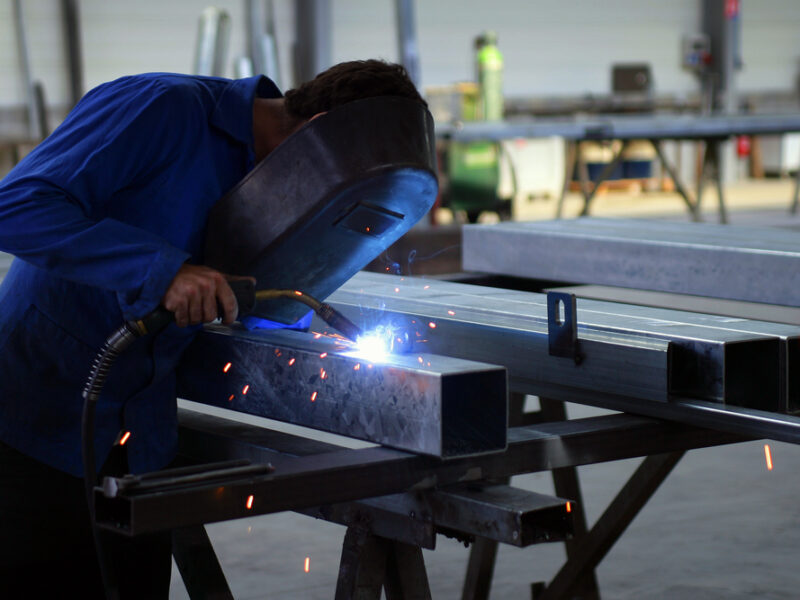
5 Common Types of Welding Joints
Your structural steel fabricators will decide on the safest and strongest welding method to undertake. Before welding mild steel, the Baker Steel Trading team ensures that we’ve appropriately evaluated the task at hand and selected one of the following welding joints depending on the unique forces of each application.
Butt Joint Welding
The butt joint weld is also known as the square-groove, a name which fairly simply summarises the look of the joint. Commonly used as one of the most popular ways of joining two metals together, a butt joint weld consists of having two flat pieces held in a side-by-side parallel design. Relatively easy to master compared to other joints on this list, some welding styles used in conjunction with this include bevel-groove and square-groove butt welds.
Tee Joint Welding
As its name suggests, a tee joint weld is used when two metals cross at a 90° angle so that the edges meet in the centre of a component, forming a ‘T’ shape. This is widely considered a type of fillet weld, which means that the weld involves joining two pieces of metal together at an angle. A tee joint weld is also made whenever a pipe or tube is welded onto a base plate, which is a regular request for coded welders.
Corner Joint Welding
Particularly common in the sheet metal industry, corner joint welds are typically used on the outer edge of the metals, creating a weld that comes together at right angles and eventually forms an “L” shape. If your steel will be used to make box frames or box sections, corner joint welding will likely be the option that your steel fabricators choose.
Lap Joint Welding
Often used when two metals of different thicknesses need to be joined together, a lap joint weld is formed when two or more materials overlap. There are a few other options for steel fabrication companies to consider when welding steel, as the weld can be made on either side or even both if the job’s specifications require that.
Edge Joint Welding
Regularly used when a fabrication job includes sheet metal parts that have flanging edges, an edge joint weld is placed at a location on the edge of the metal sheet before being made to attach the adjacent pieces of steel. Steel fabricators will often set the two sheets of metal side by side to weld the items on the same edge, producing a clean finish.
Which Joints Do Mobile Welders Use?
As mobile welding is often completed on construction sites, there is a concern about whether the weather will impact the work. Coded steel welders will often have to prepare for unpredictable conditions. To prepare for this, your chosen mobile welding company will plan the types of welding joints that need to be used in advance.
Given the right situation, Baker Steel Trading can use any of the welding joints mentioned above. Our coded welders will provide a high quality of service, ensuring that your project is a success and has the best chance of a long lifespan.
Request Mobile Welding Services
If you’re looking for experienced mobile welding services, contact Baker Steel Trading today. Our team can undertake a range of custom steel fabrication jobs, including on-site fabrication and mobile welding. We can complete tasks for anything from arc welding or MIG welding a simple steel beam to assisting in constructing a bespoke, kit-form steel frame building for you to assemble.
Here at Baker Steel Trading, we have made a name for ourselves due to the professional services we provide, and we’d love to do the same for you.