


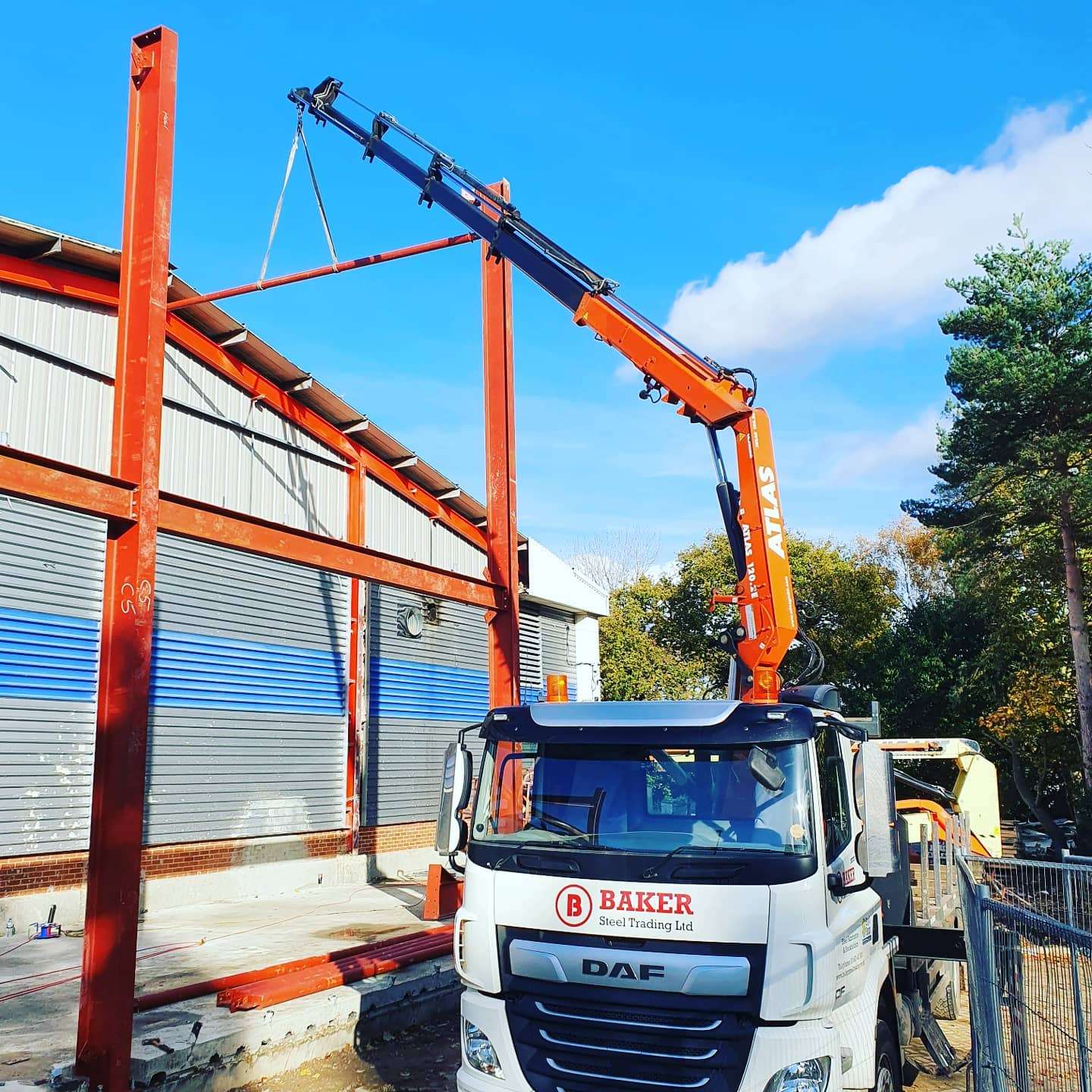
13 Nov Importance of HIABs in Structural Steel Loading
What is a HIAB?
In the structural steel industry, a HIAB is a type of specialists another word for a loader crane. These large lorries are mounted with a crane that allows you to load and unload large volumes of heavy materials without the need for additional equipment, therefore speeding up and improving your business. They are used in the construction, transport and haulage industries, come in a wide variety of types and can be customised according to your needs.
As well as loading and unloading, they can also perform a wide range of lifting, manipulating and manoeuvring tasks.
The word HIAB is actually an acronym, short for Hydrauliska Industri AB, which is the original Swedish manufacturer of this type of loading crane. However, now loading cranes tend to be called HIAB generically, whoever they are made by. Here at Baker Steel Trading, we offer a HIAB service for customers who require structural steel to be unloaded quickly and efficiently, avoiding the need for you to hire your own vehicle, and the costs that come with that.
Why is a HIAB Important for Structural Steel Loading?
HIABs can make life a lot easier for contractors who need heavy steel beams, columns and steel frame building components transported, as they save them time, effort and money in finding an independent third party to transport – and lift – the steel. They use the lorry’s engine to power the hydraulics of the crane and can deliver your goods to site as well as load and unload them, reducing the need for a separate mobile crane.
They are flexible, safe, high quality and can either be handled remotely or manually.
Which HIAB is Best for Me?
There are several factors to bear in mind when you are deciding which HIAB to go for. The type of HIAB best suited for your needs will depend on the weight of your load, the distance it needs to be lifted and what kind of access you have on site.
The following is a short guide to help you narrow down the best for you.
-
What loads will it handle?
What type of loads will you be lifting, and how heavy will they be? These are the first questions you should be asking. The weight you need lifting will help determine the crane capacity.
-
How far do they need to be lifted?
You will need a larger crane to handle the load’s weight, the further away your site of installation is away from the truck.
-
Which crane boom would suit you best?
If you need to lift heavier loads, but nearer the truck, a short-boom EP crane is best. Or a Z-boom crane folds up behind the cabin while the tool is attached, saving the need to detach the tool between jobs.
-
Where will the crane be operated from?
HIABs can be operated manually or remotely. Manual control is economical and suits many jobs, and is performed by a specially trained operator. Remote control provides flexibility and visibility, allowing you to choose the distance from where the crane is being operated.
-
How complex/precise is the operation likely to be?
With an advanced control system, the crane can perform more complex tasks, saving time, energy and fuel.
-
Which smart features would enable you to work more safely and easily?
If you need extra speed, stability or capacity, or have other facets to consider such as varying weight loads, you might want to consider adding specialised attachments and features.