


09 Jan Legal Minimum Height for Railings in the UK
You might be surprised to learn that there are strict Health & Safety regulations for railings in the UK. This is important as it keeps everyone safe, but on top of this, the Occupiers Liability Act (1957) means businesses and homeowners are liable for accidents on their properties.
The regulations which apply to guard rails and balustrades include BS6180:2011, which regulates the size and placement of handrails, balustrades and guard rails, whilst BS6399-1:1996 regulates the loads that balustrades and guard rails should be able to handle.
What Height Should a Handrail Be UK?
The laws regarding handrails depend on who an area is intended for.
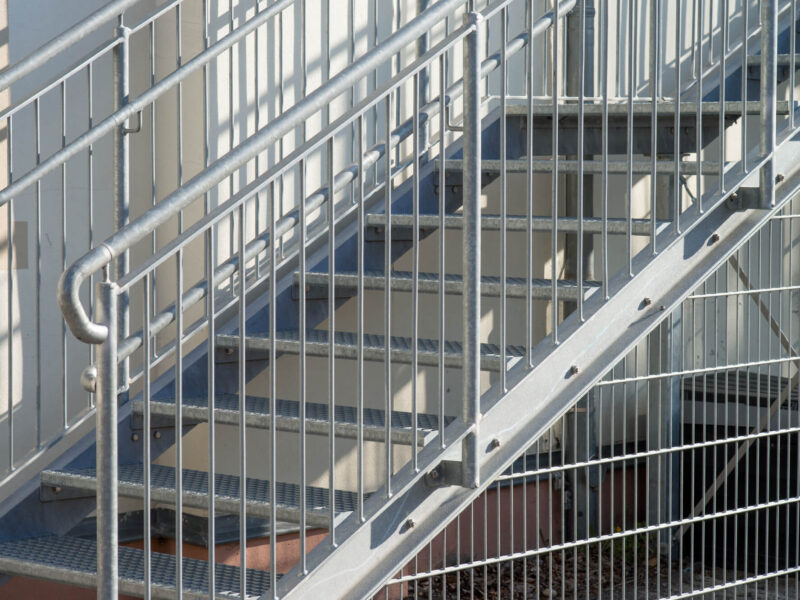
Areas that children will use will need to meet Approved Document K of the UK’s Building Regulations. This requires that railings be at least 100mm apart, that horizontal rails prevent climbing and that all designs are resistant to pushing and leaning. This is to ensure the safety of children using these areas by providing adequate protection against falling, as this could otherwise be a severe safety hazard.
What Is the Minimum Height Regulation for Outdoor Railings?
Regarding outdoor railings on rooves, terraces and balconies, railings must meet the minimum height of 1.1 metres from the platform or floor. This is strictly regulated by The Work at Height Regulations 2005. This ensures that people remain safe and don’t accidentally fall over railings and off balconies, rooves and terraces.
What Is the Minimum Height Regulation for Indoor Railings?
Regulations for indoor railings are a lot more complex than outdoors; this is because there isn’t a simple ‘minimum height’. There are regulations for handrails concerning stairs, however. Stairs should have handrails positioned 0.9m to 1m from the floor, whilst stairs that are wider than 1m should have a handrail provided on both sides.
While these regulations may seem like a pain, it’s important to remember that if you fail to follow them and someone gets hurt on your property, you may be held liable and have to deal with a severe fine.
Why Does The Height of Steel Railings Matter?
The height and shape of railings are important as railings and guards need to be placed and shaped correctly in order for people to stay safe. Having adequate railings on stairs and walkways is essential as it assists people who may be disabled or less able to walk without support get around. This is protected through building regulations to ensure areas stay safe and accessible for everyone.
What Else Do I Need to Know?
As well as making sure handrails and railings are in the correct position and place, you need to make sure that handrails are the right material, reflectiveness and shape. Handrails should contrast from their surroundings without being highly reflective. Their shape must be round to ensure a good grip. The specifics of this are outlined in Section K of the Building Regulations UK.
It’s also key to note that handrails shouldn’t protrude into access routes and should be finished to prevent clothing from getting caught on the railing. This is why railings are often downturned at the top and bottom of flights of stairs.
Bespoke Steel Railings and Gates from Baker Steel Trading
Steel Railings and Gates from Baker Steel Trading are expertly crafted for an ergonomic, safe and beautiful finish. The expert steel fabricators at Baker Steel Trading have vast experience in creating bespoke steel gateways and railings for various uses.